Phonics
At Wildground, our aim is for every child to become a fluent, confident reader who develops a genuine love of reading. Children who read regularly, or are read to often, gain access to new ideas, experiences and worlds. More importantly, strong reading skills equip children to become independent, lifelong learners.
We work in partnership with families to support reading by:
- Teaching reading through the Read Write Inc. (RWI) phonics programme
- Encouraging daily reading at home and at school
- Providing access to a wide and varied range of high-quality books
To support this, we use Read Write Inc. Phonics to give children the strongest possible foundation in early reading and writing. The information below explains how the programme works and how you can help your child at home.
What is Read Write Inc.?
Read Write Inc. is a structured phonics programme designed to help children learn to read accurately, fluently and with confidence. By securing decoding skills early, children can focus on developing comprehension, vocabulary and spelling.
The programme is primarily designed for children aged 4–7, but at Wildground we begin introducing RWI in Nursery and continue teaching it beyond the age of seven where additional support is needed. RWI was developed by Ruth Miskin.
How is RWI taught?
All children are assessed every half term. These assessments allow RWI leaders to track progress and group children according to their phonics knowledge. Groups are reviewed regularly, and any child who is not making expected progress receives additional targeted support.
- Nursery: Children are introduced to early sounds through short, engaging sessions when appropriate.
- Reception: Children learn to read sounds in words and write the corresponding letters and letter groups.
- Year 1 and Year 2: Children follow the same lesson structure while progressing to more complex sounds and texts matched to their reading level. Daily RWI sessions last approximately 35 minutes.
Reading, Writing and Talking in RWI
Reading - Children:
- Learn 44 sounds and their matching letter or letter groups
- Blend sounds using Fred Talk
- Read storybooks and non-fiction texts matched to their phonics stage
- Develop comprehension through structured discussion questions
Writing - Children:
- Learn correct letter formation using memorable phrases
- Write words by segmenting sounds using Fred Talk
Talking - Children work with partners to:
- Answer questions and practise activities
- Take turns speaking and listening
- Develop confident communication and ambitious vocabulary
Key Principles of RWI Teaching
All RWI sessions are underpinned by five key principles:
- Purpose – children understand the focus of each activity
- Participation – every child is actively involved throughout
- Praise – effort and learning are celebrated
- Pace – lessons are lively and purposeful
- Passion – enthusiasm for teaching and learning is central
Learning Sounds and Blending
Children are taught to use pure sounds (for example, ‘m’ not ‘muh’) to make blending easier. At school, we introduce Fred the Frog, a puppet who helps children sound out words using Fred Talk (e.g. c-a-t, sh-o-p).
Sounds are taught in three sets:
- Set 1: Single-letter sounds and some digraphs
- Set 2: Long vowel sounds
- Set 3: Alternative spellings for sounds
Children also practise reading nonsense (alien) words to apply their phonics knowledge independently. These form part of the Year 1 Phonics Screening Check.
Cued Articulation
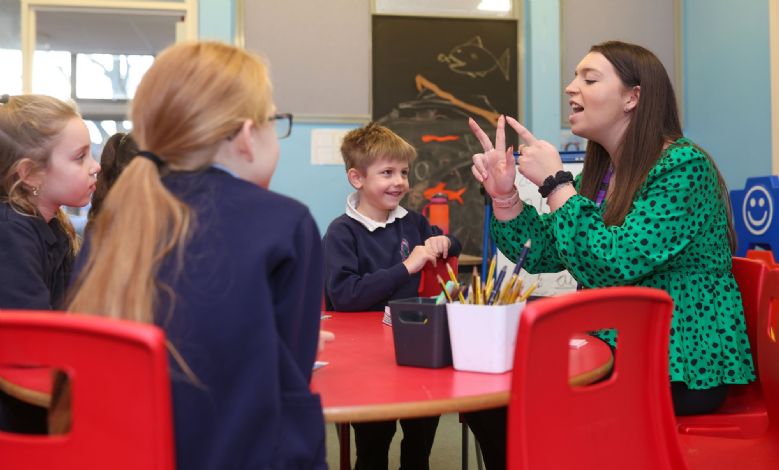
Alongside RWI, we use cued articulation, a system of hand cues that supports children in identifying and producing individual sounds. Each cue represents how and where a sound is made, helping children with speech clarity and sound recognition.
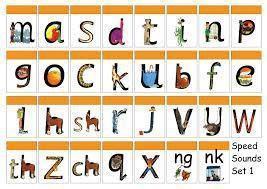
Set 1 Sounds are taught in the following order together with rhymes to help children form the letters correctly and instantly recognise sounds ready for blending.
|
Sound |
Rhyme |
|---|---|
|
m |
Down Maisie then over the two mountains. Maisie, mountain, mountain. |
|
a |
Round the apple, down the leaf. |
|
s |
Slide around the snake |
|
d |
Round the dinosaur's back, up his neck and down to his feet. |
|
t |
Down the tower, across the tower, |
|
i |
Down the insects body, dot for the head. |
|
n |
Down Nobby and over the net. |
|
p |
Down the plait, up and over the pirates face. |
|
g |
Round the girls face, down her hair and give her a curl |
|
o |
All around the orange |
|
c |
Curl around the caterpillar |
|
k |
Down the kangaroos body, tail and leg |
|
u |
Down and under the umbrella, up to the top and down to the puddle |
|
b |
Down the laces, over the toe and touch the heel |
|
f |
Down the stem and draw the leaves |
|
e |
Slice into the egg, go over the top, then under the egg |
|
l |
Down the long leg |
|
h |
Down the horse's head to the hooves and over his back |
|
sh |
Slither down the snake, then down the horse's head to the hooves and over his back |
|
r |
Down the robot's back, then up and curl |
|
j |
Down his body, curl and dot |
|
v |
Down a wing, up a wing |
|
y |
Down a horn, up a horn and under the yak's head. |
|
w |
Down, up, down, up the worm. |
|
th |
Down the tower, across the tower, then down the horse’s head to the hooves and over his back |
|
z |
Zig-zag-zig, down the zip. |
|
ch |
Curl around the caterpillar, then down the horse's head to the hooves and over his back |
|
qu |
Round the queen’s head, up to her crown, down her hair and curl |
|
x |
Cross down the arm and leg and cross the other way |
|
ng |
A thing on a string |
|
nk |
I think I stink |
Children will also use pictures for each sound to help recognise the sound and then form the shape of the sound.
Set 2
The children are then taught Set 2 Sounds - the long vowels. When they are very confident with all of set 1 and 2 they are taught Set 3 Sounds.
|
Long vowel sound |
Set 2 Speed Sound cards Teach these first |
Set 3 Speed Sound cards |
|
|---|---|---|---|
|
ay |
ay: may I play |
a-e: make a cake |
ai: snail in the rain |
|
ee |
ee: what can you see |
ea: cup of tea |
e: he me we she be |
|
igh |
igh: fly high |
i-e: nice smile |
|
|
ow |
ow: blow the snow |
o-e: phone home |
oa: goat in a boat |
|
oo |
oo: poo at the zoo |
u-e: huge brute |
ew: chew the stew |
|
oo |
oo: look at a book |
|
|
|
ar |
ar: start the car |
|
|
|
or |
or: shut the door |
aw: yawn at dawn |
|
|
air |
air: that’s not fair |
are: share and care |
|
|
ir |
ir: whirl and twirl |
ur: nurse for a purse |
er: a better letter |
|
ou |
ou: shout it out |
ow: brown cow |
|
|
oy |
oy: toy to enjoy |
oi: spoil the boy |
|
|
ire |
|
ire: fire fire! |
|
|
ear |
|
ear: hear with your ear |
|
|
ure |
|
ure: sure it’s pure? |
|
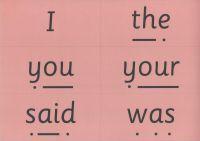
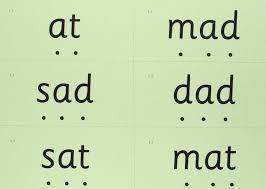
Set 3: Once children can blend sounds into words, they begin reading Ditty Books and then progress through a carefully structured sequence of storybooks. Books include:
- Green words – fully decodable
- Red words – common exception words that must be learned by sight
Children read each book several times to build fluency and comprehension before bringing it home to share.
Order of Story books:
Children will hopefully follow the order listed below. The expectation is that all children will leave Year One as confident speedy readers, ready to take on the challenges of Year Two.
|
Books |
|
Red Ditty 1-10 |
|
Green 1-10 |
|
Purple 1-10 |
|
Pink 1-10 |
|
Orange 1-12 |
|
Yellow 1-10 |
|
Blue 1-10 |
|
Grey 1-13 |
Phonics Screening Check (Year 1)
The Year 1 Phonics Screening Check is a short assessment that confirms whether children have reached an appropriate standard in phonics decoding. It helps identify children who may need additional support and ensures progress is closely monitored into Year 2 if required.
Supporting Reading at Home
You can help your child by:
- Listening to them read regularly
- Offering plenty of praise and encouragement
- Using the same pure sounds taught in school
If you have any questions about RWI, please contact the school—we are always happy to help.
Literacy and Language Group
Once children are confident, accurate readers, they move into our Literacy and Language Group. These daily sessions focus on:
- Deepening comprehension
- Developing fluency and expression
- Improving spelling and understanding spelling rules
This ensures children continue to be challenged and supported as they grow into skilled, confident readers.