Early Years: Year R & Nursery
Our Early Years Vision
Every child, family member and member of staff matters to us. We are committed to an inclusive approach where all children are supported to achieve their full potential. Our Early Years environments are warm, welcoming and respectful, offering a safe and secure space where children feel valued, confident and ready to learn. Through active, play-based learning, children are encouraged to explore, enjoy themselves and develop a lifelong love of learning inline with our federation values "Learn and Succeed Together for the Journey Ahead".
Our Early Years Curriculum
Children are born ready, able and eager to learn. They are naturally curious and motivated to interact with others and the world around them. Learning and development, however, are not automatic; they flourish through positive relationships and enabling environments that respond to each child’s unique needs and interests.
We follow the Early Years Foundation Stage (EYFS) statutory framework, which sets the standards for learning, development and care for children from birth to five. This framework ensures high-quality early education and underpins all future learning by promoting children’s personal, social and emotional wellbeing.
The information below is drawn from the Department for Education document Statutory Framework for the Early Years Foundation Stage.
Areas of Learning and Development
Children learn and develop across seven areas, which are closely interconnected. Our curriculum prioritises the three Prime Areas, as these are essential for children’s overall development and success in later learning.
Prime Areas
Communication and Language
Children develop listening, attention and understanding skills, enabling them to follow instructions, ask questions and respond thoughtfully. They learn to express themselves confidently, using language to share ideas, recount experiences and develop their own narratives.
Physical Development
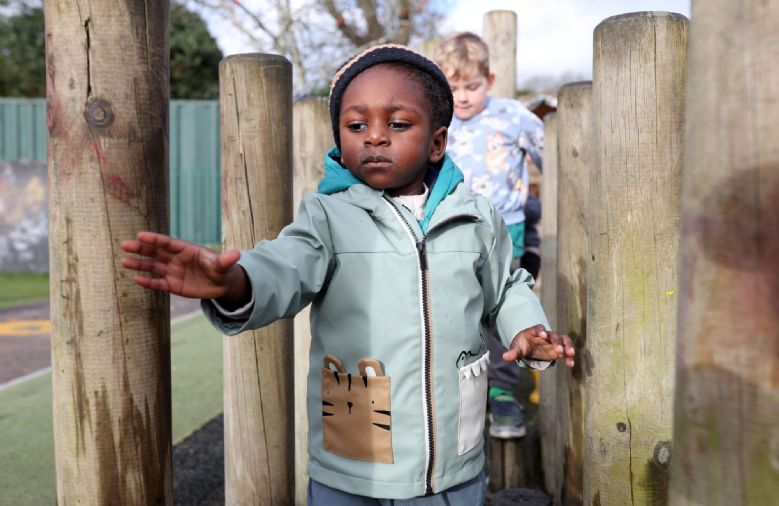
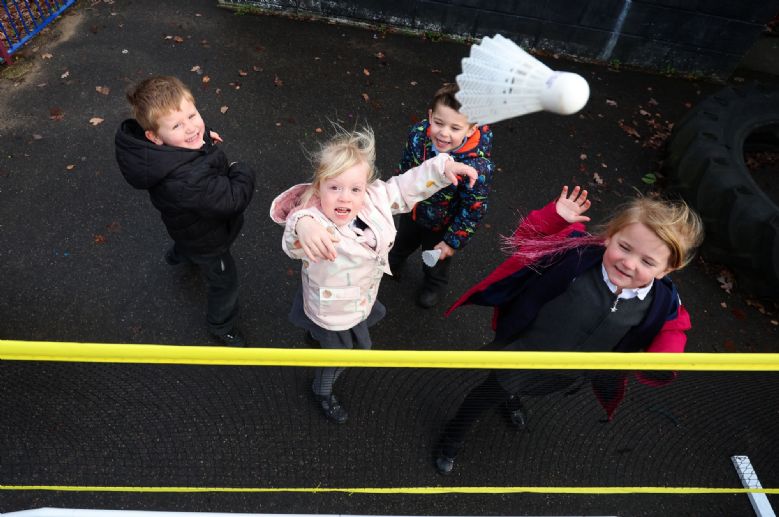
Children build strength, balance and coordination through large and small movements. They learn to manage tools and equipment safely, including pencils for writing, and develop independence in health, self-care and personal hygiene.
Personal, Social and Emotional Development
Children develop confidence, self-awareness and resilience. They learn to manage their feelings and behaviour, understand boundaries, and form positive relationships with peers and adults through cooperation, turn-taking and empathy.
Specific Areas
Literacy
Children develop early reading skills through phonics, shared stories and meaningful discussion. They begin to write words and simple sentences using phonic knowledge and develop confidence in expressing ideas through mark-making and writing.
Mathematics
Children learn to count, order and compare numbers, solve problems, and explore shape, space and measure using everyday language and practical experiences.
Understanding the World
Children explore their own lives, families and communities, developing an understanding of similarities and differences. They investigate the natural world, observe changes, and learn about technology used in everyday life.
Expressive Arts and Design
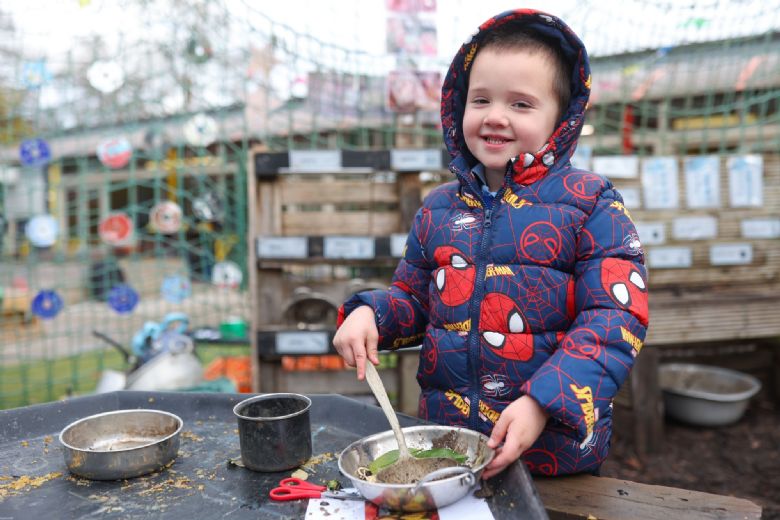
Children explore materials, music, movement and role-play, expressing ideas and feelings creatively. They use imagination to create, design and experiment across a range of media.
Characteristics of Effective Learning
Central to our Early Years curriculum are the Characteristics of Effective Learning, which describe how children learn rather than what they learn. We actively support children to develop as effective learners through:
- Playing and exploring – investigating, experiencing and having a go
- Active learning – concentrating, persisting and taking pride in achievements
- Creating and thinking critically – developing ideas, making connections and problem-solving
These learning behaviours help children approach learning with curiosity, confidence and resilience.
Love of Reading
Carefully chosen core texts underpin language and literacy development. These are read daily by skilled adults. Texts include traditional tales, classic picture books and modern stories, which inspire planning and enhancements across the curriculum.
We use the Chat, Play, Read approach to support reading at home and share resources with families. Tapestry is also used to share story videos, vocabulary, activities, nursery rhymes and more. High-quality fiction and non-fiction books are accessible throughout the environment, supported by inviting book corners, story props and daily singing.
Developing Early Reading Skills
Children are supported through:
- Rich opportunities for listening and sound awareness
- Phonics sessions
- Use of cued articulation and Makaton to support communication
- Focused key vocabulary linked to core texts
- Regular small group activities to build attention and listening skills
Tapestry
We use Tapestry to document each child’s learning journey, capturing significant moments and progress through photos, videos and observations. Families are encouraged to share achievements from home, helping to build a full picture of each child’s development and strengthening the partnership between home and Early Years.
Planning for Learning: PLODs
At Wildground, children learn through play and choice. Staff work alongside children, extending learning through meaningful interactions. We plan using PLODs (Possible Lines of Development), which are based on children’s interests and current development. From these interests, we plan enhancements that enrich our continuous provision and support children to achieve their next steps.
PLODs are flexible and evolve as children’s interests change. Alongside this, core texts and a curriculum map support learning by linking key events, seasons and themes throughout the year. Each child has small, achievable targets which are reviewed weekly. Please see below a few examples of our PLOD's: